Pieve di San Vincenti
The church
Dedicated to Santi Vincenzo e Anastasio, and part of the Diocese of Arezzo-Cortona-Sansepolcro. It is documented from the seventh century, which makes it older than almost everything around it.
How it is built
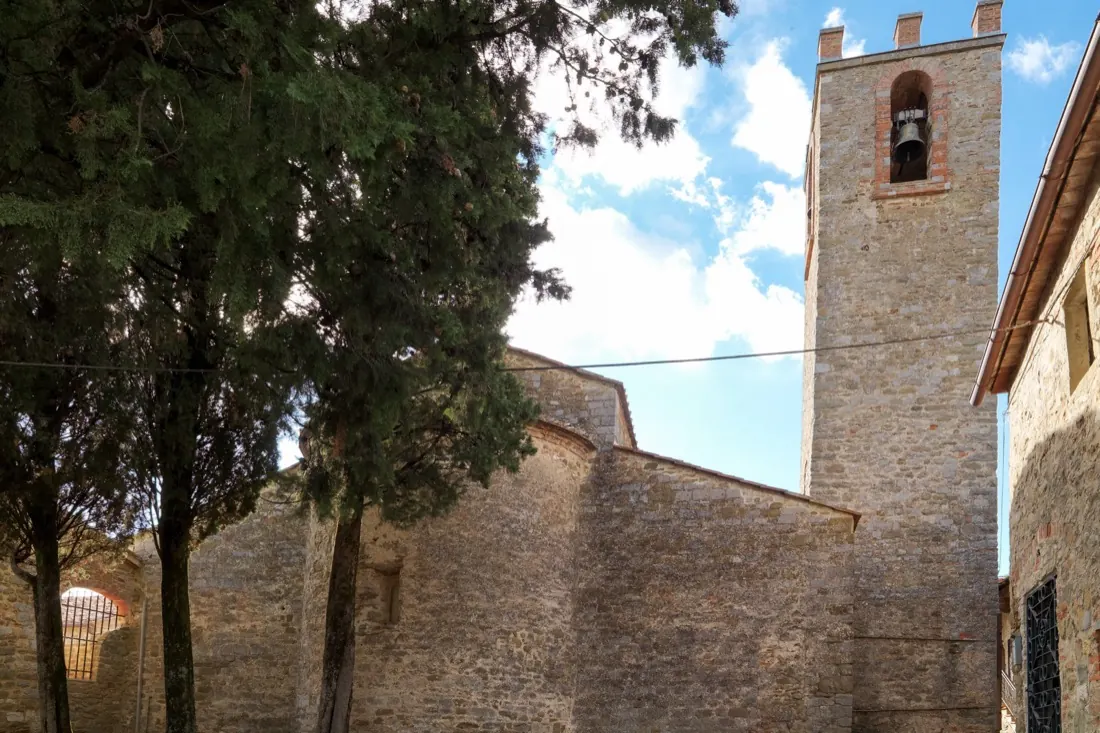
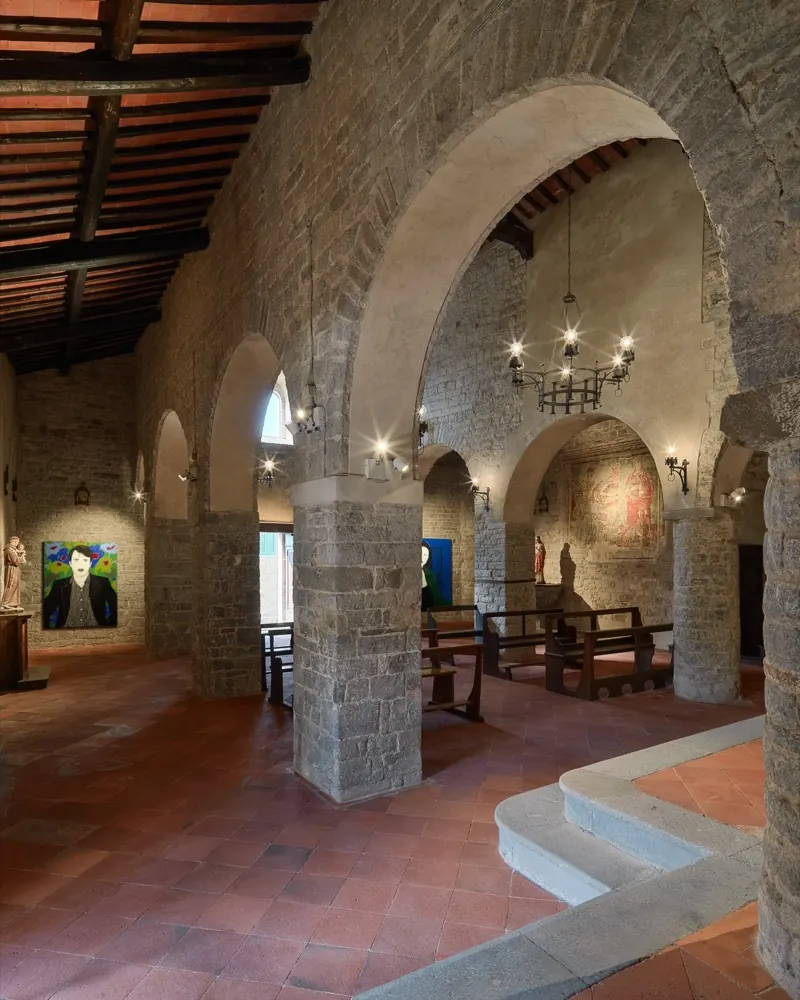
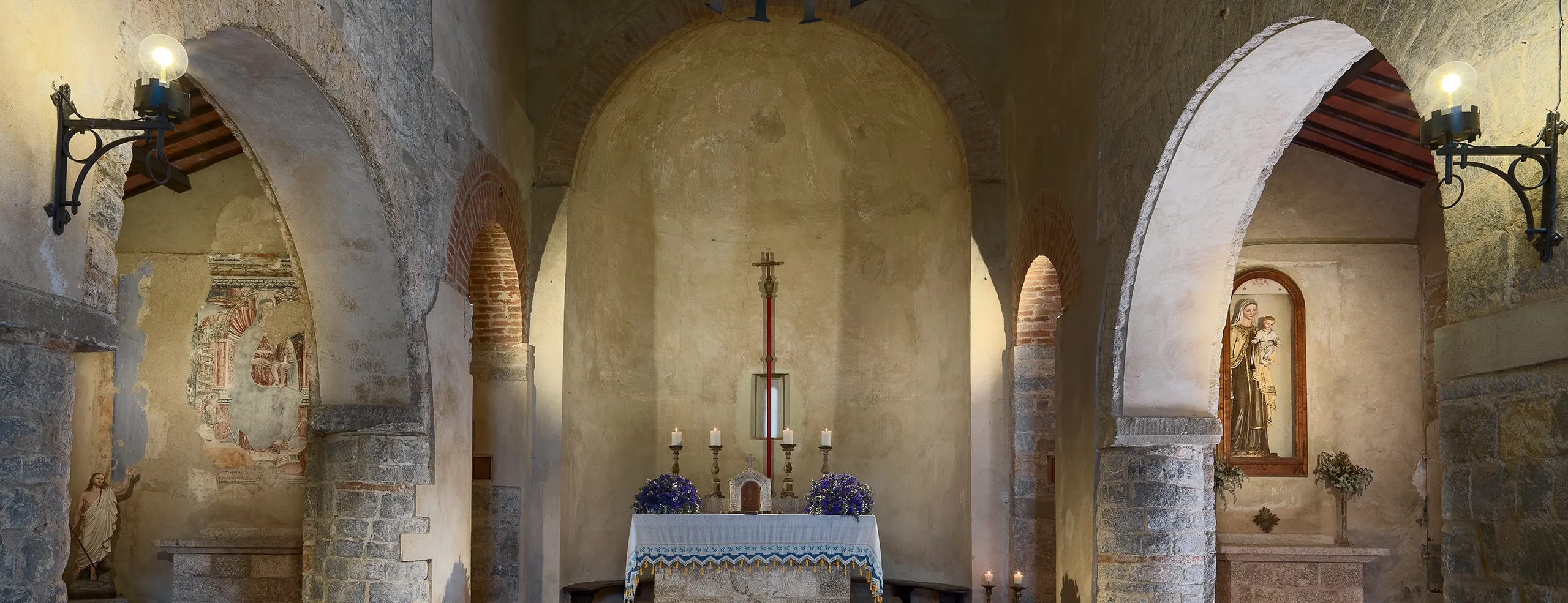
The plan is a basilica: three naves ending in a single semicircular apse. The walls are filaretto — small squared blocks of limestone laid in regular courses — and the original walling is still visible inside as well as out.
There are no openings in the side walls. The apse has a single lancet window, which cannot be seen from inside. The façade carries the entrance portal under an architraved lunette, and above it the double lancet window that is the only light the interior gets. Stone corbels are visible too, probably meant to carry an arcade that was never built.
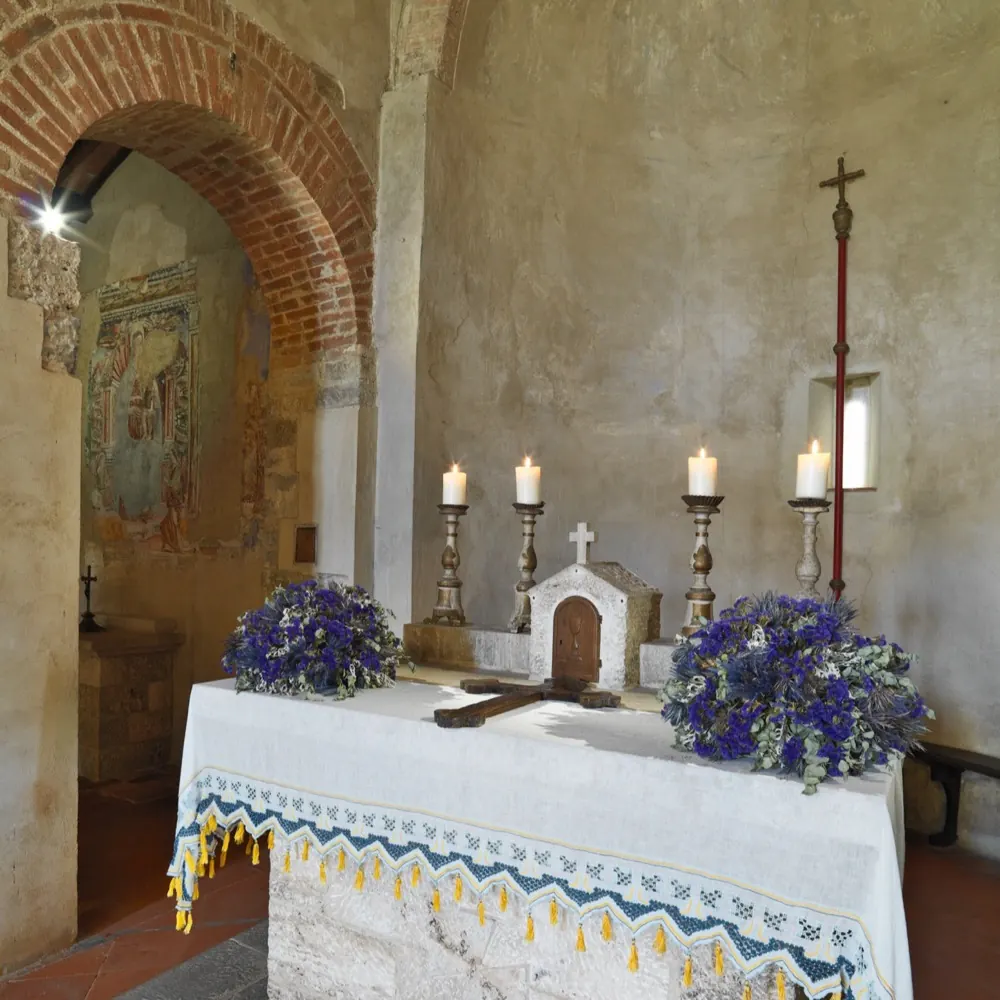
Inside, the bays of the naves are of different sizes: the first and last are much shorter than the rest. The arches stand on plain square pillars, except for one round column in the left nave. In the presbytery the pillars lean and project towards the side naves as though to take transverse arches — another thing that was never finished. Those presbytery arches are brick, where the rest of the church is limestone.
The bell tower is well preserved and simply built, with four single lancet windows looking out over the countryside.
Inside
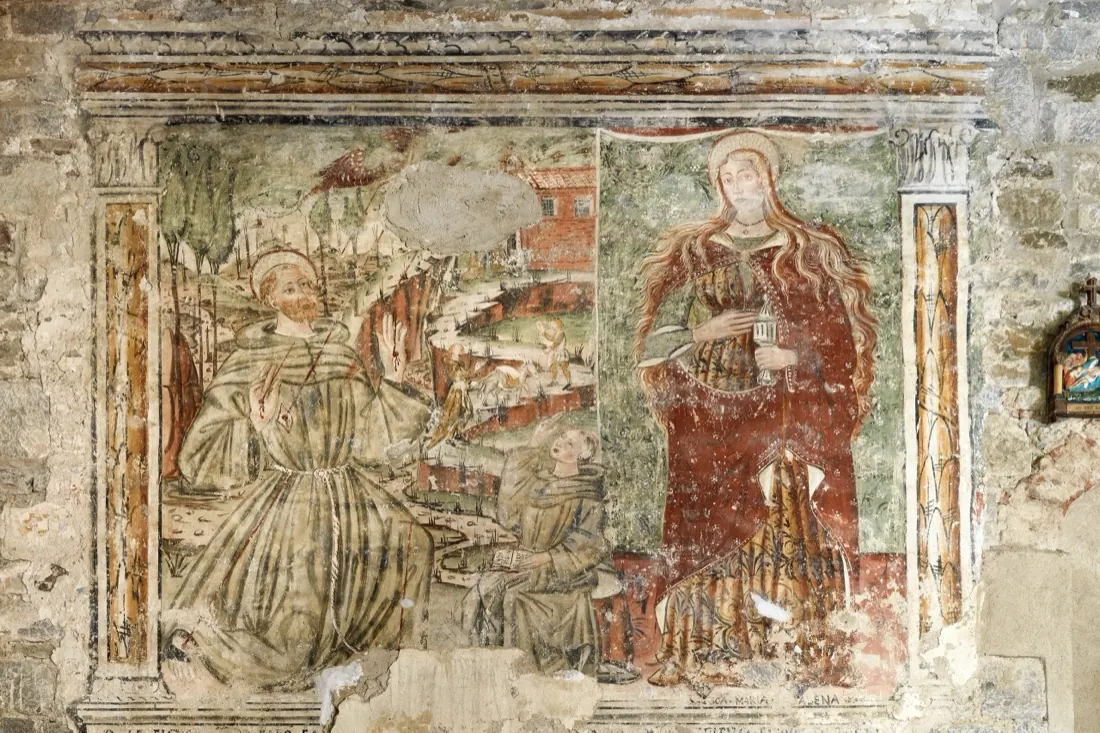
Fragments of frescoes survive on the walls, damaged but readable: a Madonna enthroned with the Child and music-making angels, and a painting of Saint Francis with the Madonna. They date from the late fourteenth century.
The baptismal font is dated 1714.
Throughout its history the church has shared its parish with the church of Altaserra.
Chronology
- 7th centuryThe church is documented, known as basilica Sancti Vincenti in fundo Bonuspagis. By tradition it was founded by Servando, Bishop of Arezzo, independent of the baptisterium at Altaserra.
- Early 8th centuryBishop Luperziano enlarges the church and consecrates two altars, to San Quirico and San Lorentino.
- Shortly after 1000A hospital is established at the church.
- 1014La Canonica is built against the church as the priest’s house.
- 1104The church is attested as a pieve — a parish church with the right to baptise.
- Late 14th centuryThe frescoes on the walls are painted.
- 1714The date carried by the baptismal font.
- 1957The last resident priest leaves.